If you are affected yourself or a family member:
This project is not created about the people it concerns, but with them — as equal partners in the research process, not merely as participants.
Draft translation — the English texts are awaiting final approval.
As a cognitive scientist at the University of Vienna and as a Feldenkrais practitioner I move between two worlds that are rarely thought of together: the scientific question of how body and self are connected — and the practical work of accompanying people in sensing this connection again.
Parkinson's is the fastest growing neurological condition worldwide and remains incurable. Medication and surgery can slow its course — but they do not reach everything the illness takes. Because Parkinson's changes not only movement, breath, facial expression and voice. Over time something quieter changes too: the feeling of still being fully present, still fully oneself. Many people affected describe this as a kind of inner estrangement — it is not only the body that narrows, but the sense of self.
This is exactly where our project begins. Together with an interdisciplinary team — psychologists, cognitive scientists, Feldenkrais teachers, filmmakers and, most centrally, people with Parkinson's themselves — we are developing a four-week movement programme based on the Feldenkrais Method. The approach: not correction, not effort, but fine perception, discovery and reconnection with one's own body.
My starting assumption: most complementary therapies aim to maintain physical function. The programme I am co-developing in the team aims at something that is often overlooked — the lived sense of body and self that Parkinson's quietly undermines. Those who regain their body awareness and expressiveness often gain more than fewer symptoms: the experience of being more fully themselves again.
A documentary film project accompanies the entire process — it records not only what happens, but how it feels. The film will later be shown publicly and opens a conversation between participants, the Parkinson's community, professionals and a wider public.
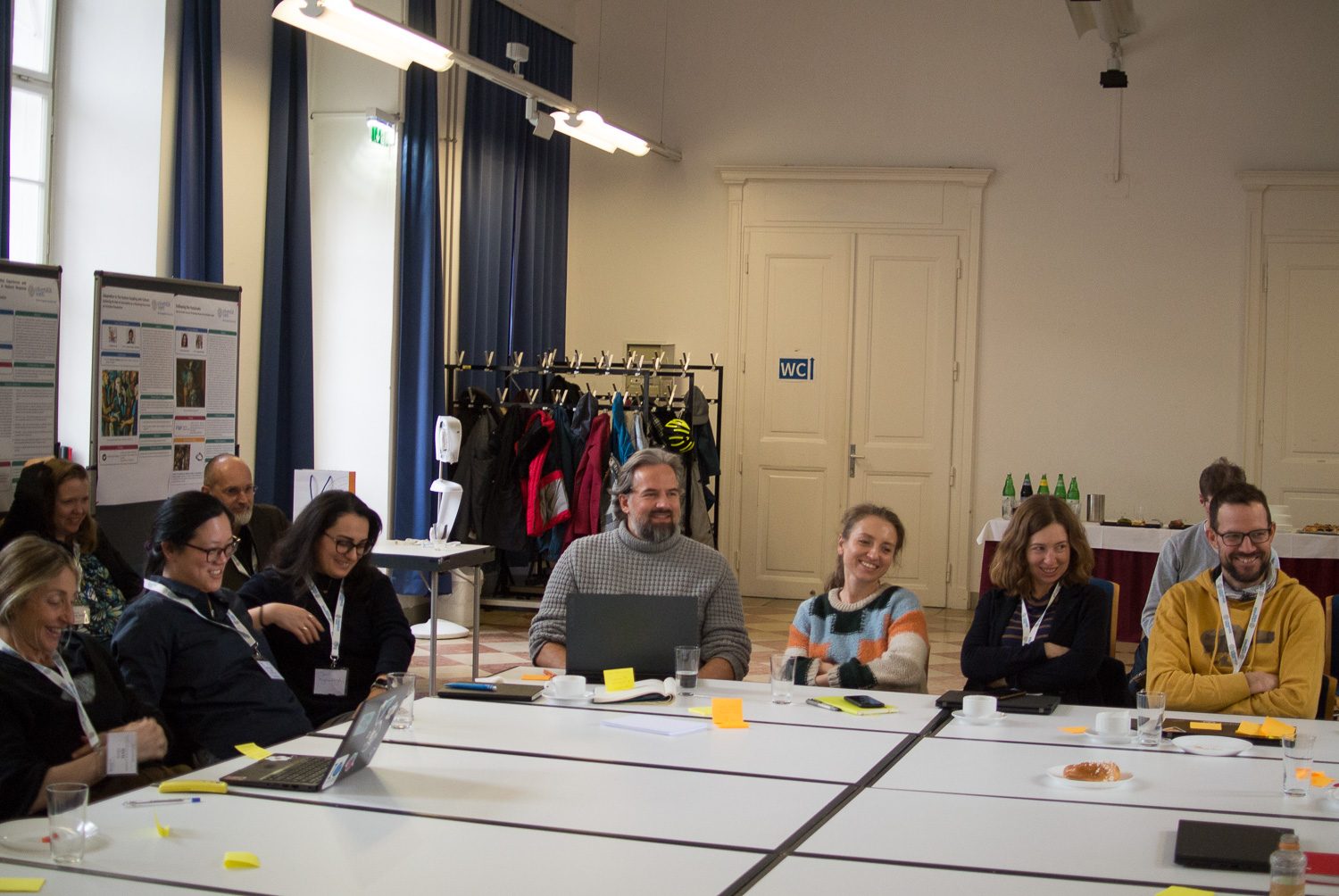
The project is created by an interdisciplinary team at the University of Vienna: psychologists, cognitive scientists, philosophy and artistic research work together with people with Parkinson's. (Draft translation)
Funded by Seed Funding of the University of Vienna, 2026.
Embodied and enactive cognitive science · phenomenology of body perception · movement learning · somatic movement practices · mental imagery · first-person methods · artistic research
I also offer the programme developed in the study outside of it — as short online one-to-one sessions, several times a week, with no travel.
To the Parkinson's offerThis project is not created about the people it concerns, but with them — as equal partners in the research process, not merely as participants.
The aim is a scientifically tested, Feldenkrais-based programme that can be integrated into existing treatment with comparatively little effort and without elaborate infrastructure — as a cost-effective addition that places dignity, expressiveness and a sense of self at its centre.
I welcome exchange and collaboration. The project is deliberately small and dialogue-oriented, as the basis for a larger, internationally comparative follow-up study.
This pilot project is the first step. Next: larger groups, several development cycles, a more comprehensive scientific evaluation — and comparison with other approaches such as physiotherapy, dance, theatre or arts-based therapies. In the long term I am particularly interested in whether the model can be transferred to other neurodegenerative conditions.
That is exactly what we are investigating. The starting consideration: most complementary offers aim to maintain physical function. Our programme addresses something less often considered — the lived sense of body and self. Whether and how strongly this works is the subject of the ongoing pilot study. Robust statements will only be possible after the evaluation. (Draft translation)
No, explicitly not. The programme replaces neither medical treatment nor medication. It is a movement and perception practice that stands alongside them. (Draft translation)
No. I also offer the programme developed in the study independently of it — as short online one-to-one sessions, several times a week, with no travel. (Draft translation)
About 30 minutes, several times a week, at your home. You lie or sit, I guide you through a movement sequence. No travel, no preparation, no pressure to perform. (Draft translation)
Talk to me. The project is explicitly created with the people it concerns, not about them. (Draft translation)
Yes. The official project entry of the University of Vienna is linked, and for collaborations and professional exchange you can reach me directly through the contact form. (Draft translation)
FWF-funded, 2024–2026, University of Vienna. Co-Principal Investigator.
https://craftingcreativity.sfu.ac.at/FWF-funded, 2020–2024, Cognitive Science Hub, University of Vienna.
https://synergies.univie.ac.at/